How to buy a boat in 5 steps
Whether you are a beginner or an experienced boater, buying a boat comes down to five stages: where to go boating, finding what fits, comparing, the sea trial and the purchase.

For every boater, beginner or experienced, buying a boat comes down to these 5 stages:
- How and where do I want to go boating?
- Orientation: what fits my wishes?
- Comparing and viewing
- Sea trial
- Buying
How and where?
Do you have a house on the water, do you live close to the water, or will you use a marina, nearby or further away? Before you buy a boat, ask yourself where the boat will be moored or stored, what kind of water you will use it on, and what matters to you there.
Open water, such as the sea or a large lake, places different demands on a boat than local canals or small lakes. Do you want to go fast, or enjoy your surroundings in near silence? How much time do you set aside for boating: getting a yacht ready to sail can easily take an hour or more. How often do you expect to go out? With whom, and how many people will usually come along? And of course: where is the financial limit? Also think of the yearly costs, such as mooring, insurance, repairs and maintenance.
What fits my wishes
Once you have an idea of how you want to use your boat, this website is the place to start your orientation. Here you will find most boat brands and all common types.
Use the filters and the compare button to build your personal shortlist and give shape to your ideal boat. Enjoy looking and comparing!
Viewing and comparing
For some the best part, for others a mountain of choice stress: making decisions. Which boat drops out, and why? Our advice: take your time, read up on information from the manufacturer (you can use the contact button for this), go to boat shows and visit forums and other websites.
Boat shows
At a boat show you will find a wide range of boats side by side, and you can step aboard freely. The large international shows are where comparing really works, such as boot Düsseldorf in January, the Cannes Yachting Festival, the Genoa International Boat Show and the Southampton International Boat Show in September. Smaller national and regional shows are good for the atmosphere and for local brands.
Viewing boats
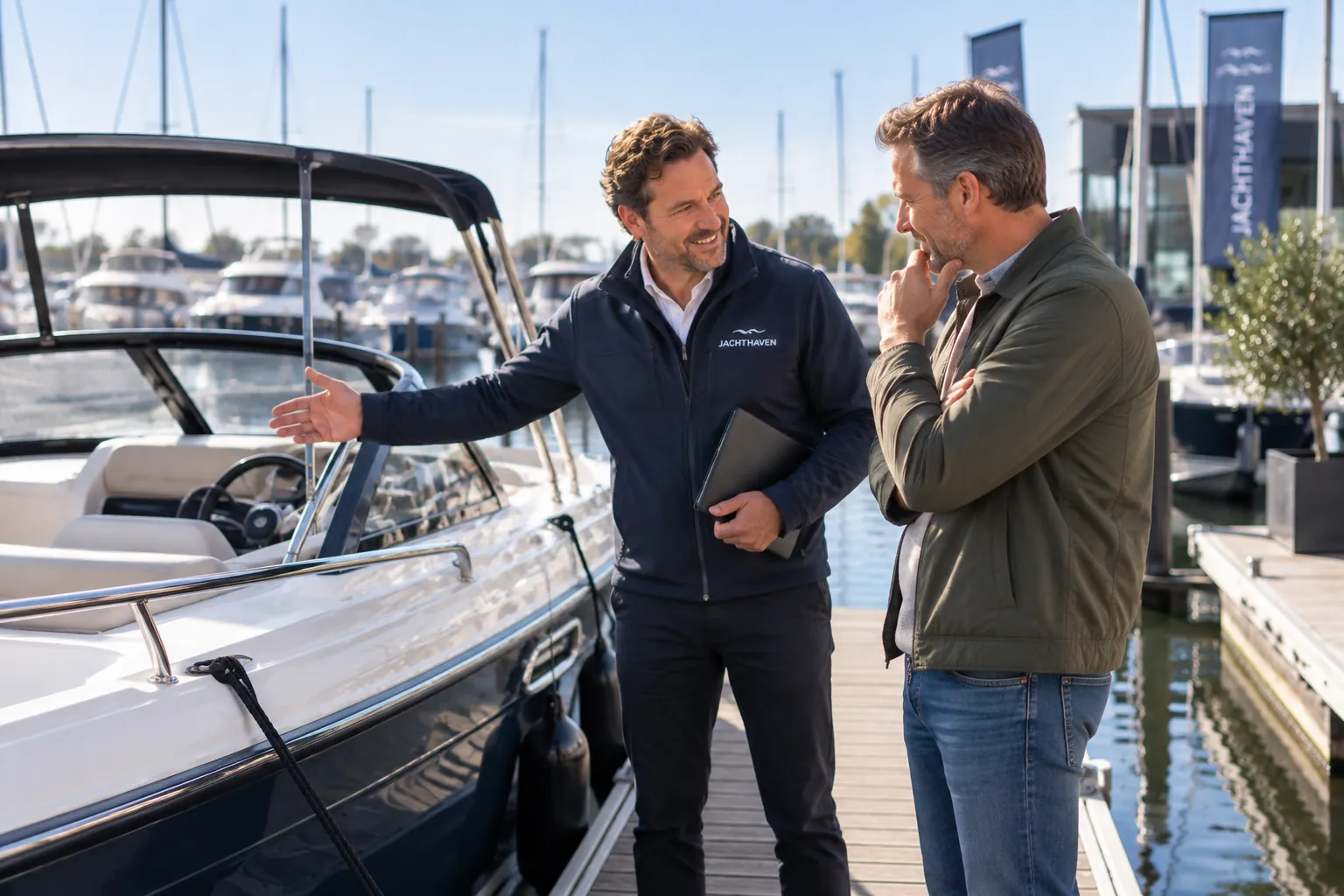
Once you have a few boats in mind, we recommend making an appointment for a viewing: that way you know the seller has enough time for you. Saturdays are probably not the best day for an undisturbed one-to-one conversation.
On a first appointment, a quick walk around on board is enough, both for you as a buyer and for the seller, to see whether the interest is serious. Do not feel any pressure to say so. After a second viewing the seller will expect a more serious commitment, so on that occasion it is important to behave as naturally as possible on board. How will it be once the boat is yours? Test everything on board, from top to bottom. Open the lockers, crawl into the forward cabin: do doors, windows and hatches open properly? Are the seats comfortable? Are the beds long enough?
If you are satisfied and seriously interested, a personal quote is the logical next step. Asking for several quotes from your shortlist at the same time is wise for a good comparison. Sea trials are usually no problem for smaller boats, but for larger yachts, certainly custom-built ones, they are not common in the viewing and comparing stage. A boat test can help, so look for one online or ask the yard or importer.
Buyer's broker
A buyer's broker can guide you through the buying process. They know the market and different ways of using a boat, and can take work off your hands or help you make the right choice when in doubt.
The specific knowledge of a yacht buyer's broker covers, among other things:
whether the yacht suits your wishes and cruising area, negotiation, pricing, what to look out for during a sea trial, surveys, VAT, contracts, customs formalities, insurance, transport and more.
Sea trial
In principle you can do a sea trial on your own, but if you have no experience at all, we recommend taking a more experienced boater with you. During the sea trial, pay attention to the following points, among others:
Stability and handling
When you step aboard, check whether the boat rocks a lot. There are many smaller models on the market that roll easily, which can make the boat unsteady when getting on and off and when moving around on board.
Also check whether the boat holds its course. At high speed, but especially at very low speed, as an engine with relatively much power will then pull to one side (the so-called propeller walk), so you have to keep correcting. Does the throttle give enough control to go slowly and adjust your speed well? You will often find yourself behind another boat or in areas with varying speed limits. Note: if the boat pulls to one side when going astern, that is not a fault. The propeller walk then takes over. Few motor yachts can hold a straight course in reverse.
Controls
Do the controls respond directly and smoothly? Let the engine warm up first at a gentle speed. There should be a temperature gauge on the dashboard.
Vibration and noise
Pay attention to excessive vibration and engine noise. Will you stay overnight and are you a light sleeper? Read up: check for a night mode and ask for the noise level (dB) of any equipment. Stabilisers can reduce rolling and improve your night's sleep considerably. Note: in normal weather, wind and water are usually calmer at night than during the day.
Bow thruster
Is there a bow thruster? Then check the capacity of both the thruster and the power supply. With the bow thruster, a boat should be able to move sideways smoothly to moor, even with current and wind; otherwise the thruster or the power supply is too light.
Wake
At different speeds, also look at the bow and stern wave. Is it not excessive? Small boats in particular can differ a lot here, and they are often used in towns, where a large wake can be a real nuisance for local residents.
Buying a new boat safely and reliably
After all the research, and once you are sure of your choice, it is time to accept the quote or make a counter-offer. Fortunately, the margins and the negotiations are not as extreme as when buying a kitchen, but it pays to ask and to find out what reasons (and room) the seller has to do something about the price.
When buying your new boat, do not think only about the price. There is much more to negotiate (or sometimes to require), such as:
- Payment method
- (Factory) warranty
- Transport
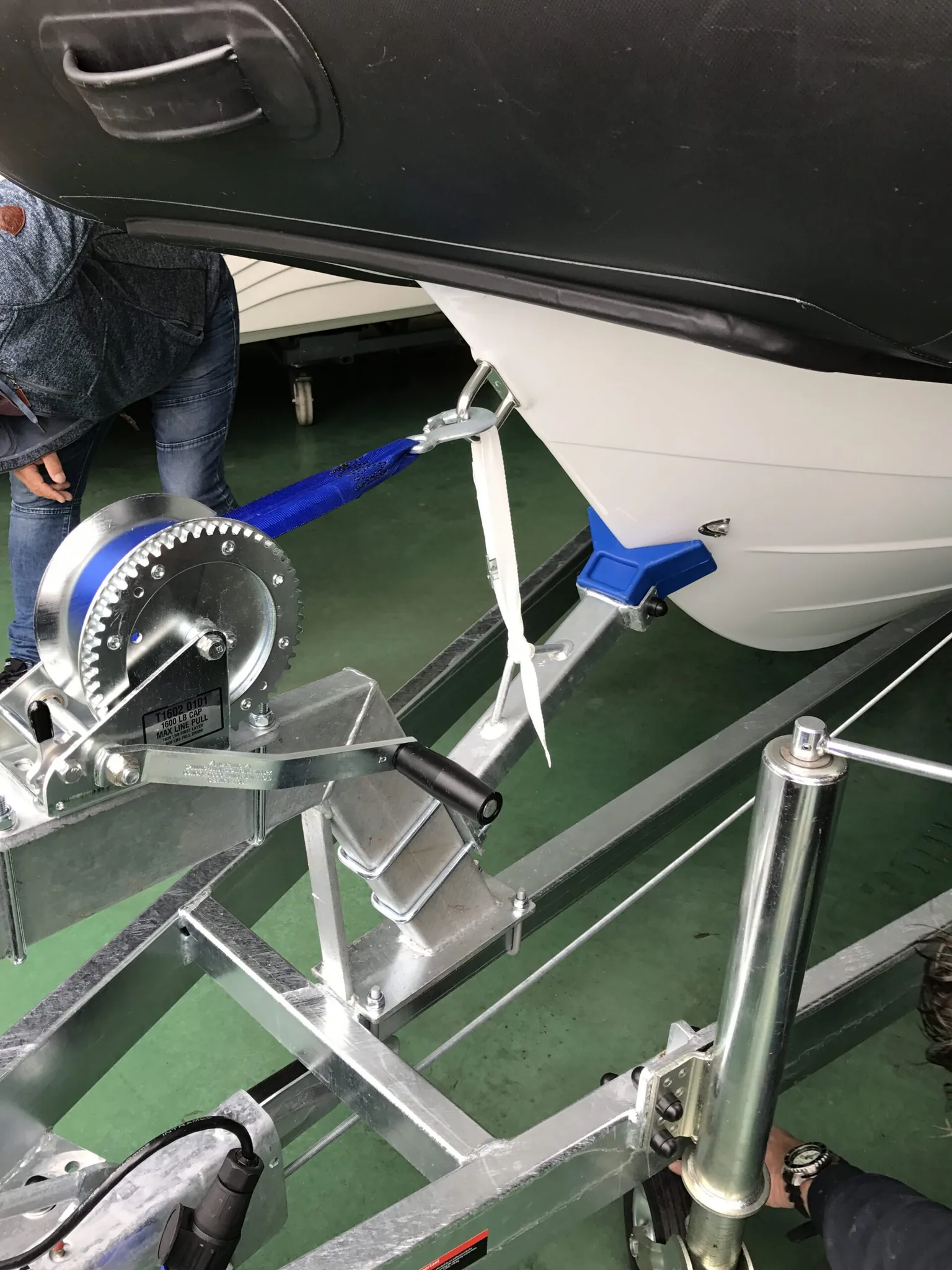
- Trailers
- Accessories (life jackets, fenders, lines)
- Fuel
- Service
- Maintenance
- Winter storage
What is your current boat worth?A valuation based on real second-hand listingsOur advice: make sure you are both happy with the price. You may well need to go back for warranty or with questions.